
Key Takeaways:
- Will ownership is actually declining. Despite growing awareness, the share of Americans with a will dropped from 31% to 26% between 2025 and 2026, even as trust ownership rose slightly.
- Belief doesn’t equal action. 73% of Americans say estate planning matters to them, but only a fraction have followed through with an actual document.
- Outdated paperwork is a hidden risk. Only 21% of families have updated their beneficiary designations, which legally override a will and can quietly undo someone’s true wishes.
- A simple estate often doesn’t need a lawyer. Straightforward finances, clear beneficiaries, and no blended-family complications make a DIY will a reasonable, legally valid option.
- Complexity is the real trigger for hiring an attorney. Business ownership, blended families, special-needs dependents, multi-state property, or a desire to disinherit someone all raise the stakes enough to warrant professional drafting.
- Dying without a valid will has real costs. Longer probate timelines, family disputes, and default state inheritance rules can all override a person’s actual intentions.
- Estate plans need periodic maintenance. Marriage, divorce, new children, or a move to another state can make an existing will outdated, so it shouldn’t be treated as a one-time task.
Writing a will feels like one of those tasks that sits permanently on the to-do list. Many people assume it requires a lawyer, a formal appointment, and hundreds of dollars they’d rather spend elsewhere. Others assume the opposite: that a will is a simple form you can fill out in twenty minutes and forget about. The truth sits somewhere in between, and the right answer depends entirely on your personal circumstances, the size and complexity of your estate, and how much risk you’re willing to accept if something goes wrong.
This article breaks down when a do-it-yourself will is genuinely sufficient, when hiring an estate planning attorney becomes the smarter move, and what the latest 2026 research says about how Americans are actually approaching this decision. Spoiler: most people are still putting it off entirely, and that hesitation carries real consequences for the families left behind.
What a Will Actually Does and Why It Matters
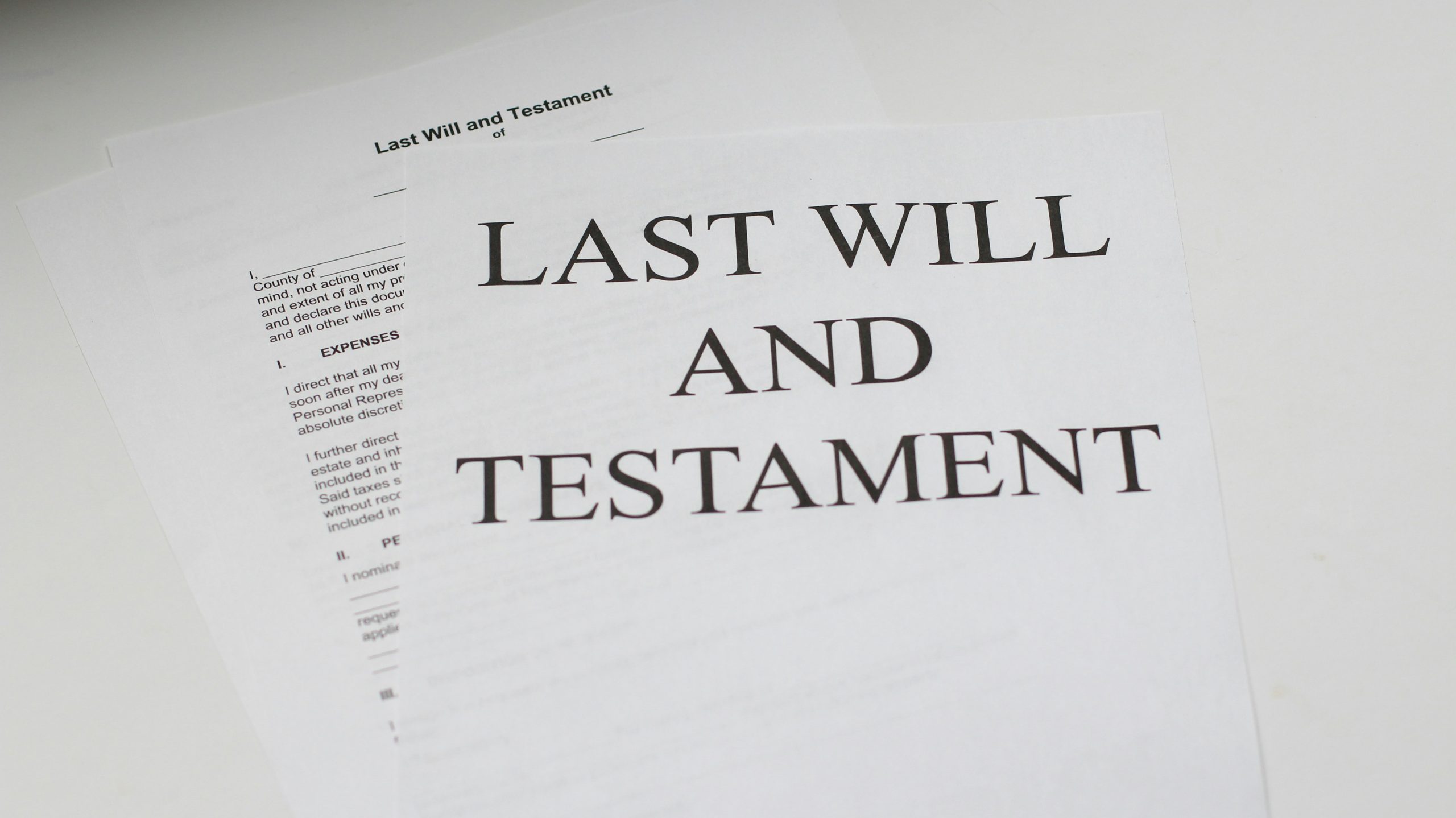
A will is a legal document that spells out how you want your property, assets, and responsibilities handled after you die. At minimum, it typically names:
- An executor who will carry out your wishes
- Beneficiaries who will receive your property
- Guardians for any minor children
- Instructions for handling debts, taxes, and specific bequests
Without a valid will, state intestacy laws decide who inherits your property, and those default rules rarely match what an individual would have actually wanted. A surviving partner who was never legally married, a stepchild who was never formally adopted, or a close friend who acted as a caregiver could all be left with nothing, regardless of the deceased person’s true intentions. This is part of the reason estate planning has become such a widely discussed financial topic: the paperwork itself is less important than the protection it provides to the people you leave behind.
It’s also worth understanding what a will does not do. Certain assets, including jointly owned property with rights of survivorship, retirement accounts, and life insurance policies, typically pass directly to the named co-owner or beneficiary regardless of what the will says. A will governs the rest: personal belongings, individually owned real estate, business interests, and any assets that don’t already have a designated beneficiary attached to them. Understanding this distinction matters because many people mistakenly believe a will covers everything they own, only to discover later that an outdated beneficiary form quietly overrode their stated wishes.
The format and formality required for a valid will also varies by state. Some states require two witnesses who are not beneficiaries, while others recognize handwritten, or “holographic,” wills under narrow circumstances. A small number of states still permit oral wills in very limited situations, such as a declaration made during a final illness. Because these rules differ so widely, it’s worth confirming your state’s specific requirements before assuming that any template found online will automatically satisfy them.
When a Simple Will Is Enough
Not every estate requires a lawyer. If your financial life is relatively straightforward, a self-prepared will, whether through an online platform or a state-approved template, may hold up perfectly well in court. You’re generally a good candidate for a DIY approach if most of the following apply to you:
- You have a modest estate with no complex investments, business interests, or multiple properties
- Your beneficiaries are clear and unlikely to be disputed
- You don’t need to set up a trust for tax planning or asset protection
- You don’t have a blended family situation with children from multiple relationships
- Your state doesn’t have unusual witnessing or notarization requirements that complicate self-preparation
For these situations, online will-writing services can produce a legally valid document as long as you follow your state’s execution requirements closely, including the correct number of witnesses and, in some states, notarization. The risk isn’t necessarily that the document is invalid; it’s that a template can’t anticipate every family dynamic or asset type, which is where mistakes tend to slip in unnoticed until it’s too late to fix them.
When You Should Bring in an Attorney

Certain circumstances raise the stakes enough that professional guidance becomes worth the cost. An attorney doesn’t just fill in blanks; they identify problems you didn’t know existed and structure your estate to avoid them. Consider hiring a lawyer if any of these apply:
- You own a business and need a succession or ownership transfer plan
- You have a blended family, prior marriages, or estranged relatives who might contest the will
- Your estate is large enough to trigger federal or state estate taxes
- You want to disinherit a close relative, which requires precise legal language to withstand a challenge
- You have a child or dependent with special needs who requires a supplemental needs trust
- You own property in multiple states or countries
- You want to minimize probate through trusts or other advanced planning tools
In these scenarios, understanding how lawyers protect your assets and rights becomes especially relevant, because a poorly worded clause or an overlooked beneficiary designation can unravel an otherwise well-intentioned plan. An attorney can also advise on complementary documents, such as a durable power of attorney and a healthcare directive, that a basic will template typically doesn’t address at all.
What the 2026 Data Reveals About America’s Estate Planning Gap
The gap between knowing you should have a will and actually creating one is wider than most people assume, and recent research puts hard numbers behind that hesitation.
Based on a nationally representative survey of 5,000 U.S. adults conducted in late January and early February of 2026, will ownership among Americans actually declined over the past year, dropping five percentage points, from 31 percent in 2025 down to 26 percent in 2026, according to the Trust & Will 2026 Estate Planning Report. That’s a notable reversal, since estate planning adoption might be expected to rise steadily as awareness campaigns and online planning tools become more common. Instead, the report suggests that fewer than three in ten adults currently have a will in place at all. Interestingly, the same research found that the share of people who own a trust climbed from 11 percent to 14 percent during the same period, which hints that the small segment of Americans who are actively planning are gravitating toward more comprehensive legal structures rather than simple wills.
What makes this trend especially striking is the disconnect between attitude and action. The same report notes that 73 percent of Americans consider estate planning personally important to them, yet the actual completion rate remains stuck at a fraction of that figure. In other words, most people intellectually understand the value of planning ahead; they simply aren’t converting that belief into a finished, signed document.
This is precisely where the second data point becomes relevant. Separate 2026 research from Empathy, a company focused on family and estate-related resources, examined not just will ownership but the broader ecosystem of estate planning documents that families rely on. That research found that just 31 percent of families currently have any kind of formal estate plan in place, only 32 percent have a will, and a mere 21 percent have kept their beneficiary designations up to date, according to Empathy’s 2026 estate planning research. That last figure deserves particular attention. Beneficiary designations on retirement accounts, life insurance policies, and payable-on-death bank accounts legally override whatever a will says, yet the Empathy research shows that most families haven’t touched these designations in years, if ever. A person could spend money on a professionally drafted will and still have their assets distributed incorrectly simply because an old 401(k) beneficiary form was never updated after a divorce or the birth of a child.
Taken together, these two independent 2026 studies point to the same underlying story from different angles: awareness of estate planning is high, but execution is low, and the documents people do have are often incomplete or outdated. That combination creates exactly the kind of gap that leaves families exposed at the worst possible moment.
The Hidden Costs of Delaying or Skipping a Will
It’s tempting to treat an unfinished will as a low-stakes procrastination item, similar to reorganizing a closet or finally starting that diet. But the consequences of dying without a valid, up-to-date will can be significant and, in many cases, irreversible.
- Probate delays. Estates without a will often take longer to settle because the court has to establish heirs and appoint an administrator from scratch.
- Family conflict. Ambiguity invites disagreement. Siblings, stepfamilies, and even close friends can end up in prolonged disputes over property that a clear will would have settled instantly.
- Unintended beneficiaries. State intestacy laws follow a rigid formula that may not reflect your actual relationships or wishes.
- Guardianship uncertainty. Parents without a will leave the choice of who raises their minor children up to a judge rather than to themselves.
- Higher costs overall. Legal fees, court costs, and prolonged administrative work almost always cost an estate more than the price of proper planning would have.
This is where how estate planning protects your family’s future becomes more than a talking point; it’s a measurable outcome. A completed, properly executed will reduces uncertainty, shortens the probate timeline, and gives loved ones clear instructions during an already difficult period. The financial and emotional cost of skipping this step tends to fall not on the person who died, but on the people they left behind.
DIY Will Kits Versus Attorney-Drafted Wills
Choosing between a self-service platform and a licensed attorney often comes down to weighing cost against complexity and risk tolerance.
Online will-writing platforms typically offer:
- Lower upfront cost, often a fraction of attorney fees
- Fast turnaround, sometimes completed in a single sitting
- Straightforward guided questions for uncomplicated estates
- Easy updates if your situation changes slightly over time
Attorney-drafted wills typically offer:
- Personalized legal language tailored to your state’s requirements
- Strategic advice on tax exposure, trusts, and asset protection
- A professional who can spot issues you wouldn’t think to ask about
- Stronger documentation that’s harder for disgruntled relatives to contest
- Coordination with other estate documents, like powers of attorney and trusts, so nothing conflicts
Neither option is universally “better.” A DIY kit that fits a simple, low-conflict estate can be just as legally sound as an expensive attorney-drafted document. Conversely, an attorney-drafted will for a complicated estate, complete with a business, blended family, and significant assets, can prevent problems that would otherwise cost far more to untangle later, both financially and emotionally.
There’s also a hybrid approach worth considering. Some people start with an online platform to organize their thoughts and assets, then bring that draft to an attorney for a paid review rather than a full custom drafting engagement. This can be a cost-effective middle ground: you get the speed and lower price point of a self-service tool, plus a professional set of eyes checking for gaps, outdated language, or state-specific requirements you might have missed. Many estate planning attorneys offer flat-fee review services specifically for this purpose, so it’s worth asking about pricing structures before assuming a full consultation is your only option.
Cost is naturally a major factor in this decision, and it helps to think of it in terms of risk rather than a simple price comparison. A basic online will might cost under a hundred dollars, while an attorney-drafted estate plan, particularly one involving trusts, can run into the thousands. The relevant question isn’t which option is cheaper upfront; it’s which option is cheaper across the full lifespan of the estate, including the potential cost of court challenges, delayed probate, or unintended tax consequences if something in the plan doesn’t hold up.
Questions to Ask Before Choosing Your Path
Before deciding whether to hire a lawyer, walk through a short self-assessment. Ask yourself:
- Does my estate involve a business, multiple properties, or significant investments?
- Could any family member reasonably be expected to contest my wishes?
- Do I need to set up guardianship provisions for minor children or dependents with special needs?
- Have I reviewed my beneficiary designations on retirement accounts and insurance policies in the past few years?
- Am I comfortable navigating my state’s specific witnessing and execution requirements without guidance?
- Would peace of mind from professional review be worth the added cost for my particular situation?
If most of your answers point toward complexity, uncertainty, or a family dynamic with potential for conflict, scheduling a consultation with an estate planning attorney is generally the more prudent path. If your situation is straightforward and low-risk, a reputable will-writing platform combined with careful attention to your state’s execution rules may serve you just as well.
It’s also worth revisiting these questions periodically rather than treating your will as a one-time task. Major life events, including marriage, divorce, the birth of a child, a significant change in assets, or relocating to a different state, can all affect whether your existing will still reflects your wishes or still meets your new state’s legal requirements. An estate plan that was perfectly adequate a decade ago may no longer serve its purpose today, which is exactly the kind of gap that the 2026 research on outdated beneficiary designations highlights so clearly.
Making the Decision That Fits Your Life
There’s no universal rule that applies to every household, which is exactly why so many people delay the decision altogether. The 2026 data makes clear that the vast majority of Americans recognize the importance of having a will, yet a relatively small percentage have actually followed through, and even fewer have kept their supporting documents current. Closing that gap doesn’t require perfection on the first attempt. It requires an honest look at your own financial picture, your family relationships, and how much complexity you’re realistically dealing with.
Whether you choose a simple online template or sit down with an attorney, the goal is the same: a clear, legally valid document that reflects your actual wishes and spares your family unnecessary confusion, delay, and cost. Given how many people report meaning to get this done but never quite finishing it, the most valuable step you can take today isn’t necessarily hiring a lawyer or picking a specific platform. It’s simply starting the process before life makes the decision for you.